SILENCE FEEDS AUTHORITARIANISM
Russia
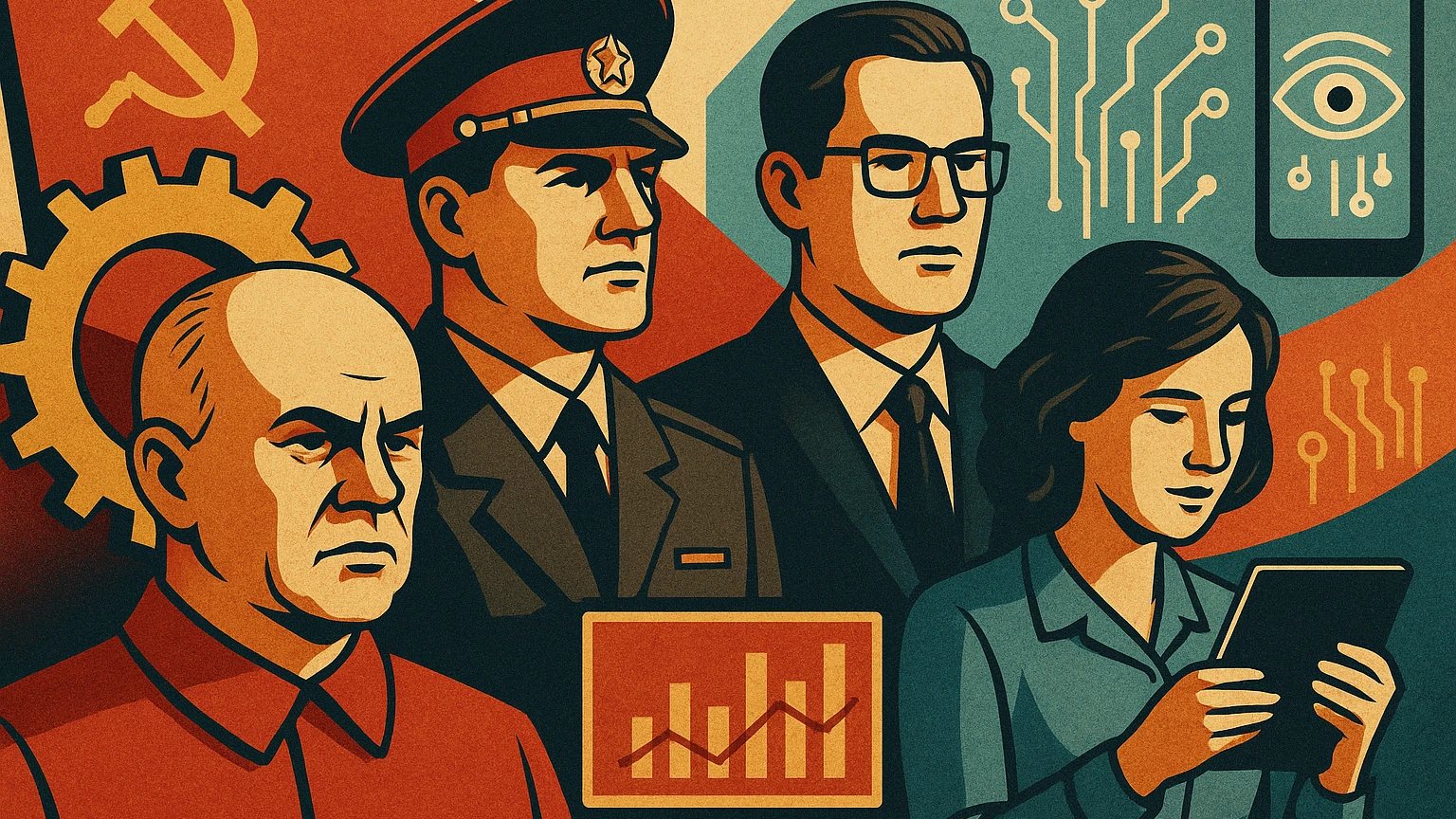
Russia is formally a federal presidential republic, but in practice functions as a highly centralized, security-driven, consolidated authoritarian regime.
Real political competition has been dismantled, and the state is dominated by an entrenched power elite.
Political system and governance
Since the early 2000s, Russia has undergone deep authoritarian consolidation:
- Near-unlimited presidential power
- Dominance of security services (“siloviki”) in governance
- Tightly controlled, non-competitive elections
- Systematic repression of opposition, including imprisonment and forced exile
- Regional governments fully subordinated to the Kremlin
Decision-making is concentrated in a narrow circle, with institutions functioning primarily in a symbolic capacity.
Human rights and civil society
Civic space in Russia has been heavily dismantled:
- “Foreign agent” and “undesirable organization” laws have crippled NGOs
- Independent media have been shut down or exiled
- Political activists face criminal charges, intimidation, and imprisonment
- Public protests are effectively banned
- Extensive digital censorship and surveillance
Repression intensified dramatically after 2022.
Economy and key indicators
Russia’s economy is resource-dependent and controlled by state-aligned elites:
- Strategic industries dominated by the state and security networks
- Western sanctions have accelerated economic stagnation and technological isolation
- Weak competition and declining transparency
- Patronage networks and systemic corruption
Economic policy is instrumentalized to maintain regime stability rather than foster development.
Regional relations and foreign policy
Russia pursues an assertive, militarized foreign policy:
- Use of force to maintain influence in the post-Soviet space
- Hybrid operations and coercive diplomacy
- Deep confrontation with Western states
- Increasing strategic dependence on China
Foreign policy serves as a central tool for internal mobilization and regime legitimization.
Challenges and prospects
- Long-term economic decline due to sanctions and isolation
- Public dissatisfaction under rising authoritarian repression
- Institutional erosion and leadership succession risks
- Diminishing geopolitical influence
- Vulnerability to technological backwardness