Introduction
In recent years, Turkiye has sought to present itself on the international political stage as the “center of negotiations,” the “key to dialogue,” and the “guarantor of peace.” Ankara has set for itself the goal of being a result-producing actor that establishes negotiating tables and brings conflicting parties together in both regional and global crises. In official rhetoric, this line is portrayed as evidence of Turkiye’s growing power, diplomatic agility, and expanding global influence.
However, developments over the past months reveal a significant gap between this claim and reality. The relocation of U.S.–Iran negotiations from Istanbul to Oman, the shift of discussions related to the Russia–Ukraine war from Turkiye to the Gulf region, and the key stages of Azerbaijan–Armenia normalization taking place along the Brussels–Washington–Abu Dhabi axis cast doubt on Ankara’s claim to being a “mediation hub.”
This article seeks to answer the following question: Why is Turkiye not at the center of these processes, despite its desire to actively participate in all these disputes, organize negotiations, and appear as an important player?
In this article, KHAR Center analyzes the gap between the role Turkiye seeks in the U.S.–Iran, Russia–Ukraine, and Azerbaijan–Armenia issues and the role actually assigned to it. The analysis focuses on how credible Ankara’s commitment to neutrality is perceived to be, how major powers view Turkiye, and the consequences of transforming mediation into a display of leadership. The aim is to understand why Turkiye does not play a primary role in peace negotiations and instead remains largely a supporting actor.
Why Were the Iran Talks Moved from Istanbul to Muscat?
When protests began in Iran at the end of December and Tehran responded with a harsh crackdown, Ankara initially tried to display a neutral position and to “not see” the developments. However, this silence did not last long. After statements from the United States suggesting that “we may strike Iran,” Turkiye entered the process. On January 9, Turkish Foreign Minister Hakan Fidan stated that the protests were rooted in Iran’s internal problems but had been exaggerated through manipulation by Iran’s rivals. Fidan also said that they were making non-public efforts toward a compromise in which both sides in Iran could benefit (Turkish MFA, January 2026a).
On January 21–22, Turkish President Recep Tayyip Erdoğan discussed the Iran issue in telephone conversations with U.S. President Donald Trump and Iranian President Masoud Pezeshkian, stating that Turkiye did not look favorably upon scenarios involving foreign intervention in Iran (Afacan, February 5, 2026).
Erdoğan’s position was reiterated by Hakan Fidan in an interview with Al Jazeera on January 28, where he stated that “attacking Iran, starting a war, would be wrong,” and said that they had proposed to the Americans that the dossiers between Iran and the United States be resolved one by one (Al Jazeera, January 2026). Two days later, Iranian Foreign Minister Abbas Araghchi met with both Fidan and Erdoğan in Istanbul. At the joint press conference between Fidan and Araghchi, the Turkish foreign minister stated that he had held a lengthy phone discussion the day before with Trump’s special envoy Steve Witkoff, openly declaring Ankara’s mediation claim (Turkish MFA, January 2026b). Following this meeting, it was announced that U.S.–Iran talks would be held in Istanbul on February 6 (Axios, February 2026).
However, only a few days later, it was announced that Iran did not wish the negotiations to take place in Turkiye (Haber 7, February 3, 2026). Within hours of claims that the meeting had been canceled, Iranian Foreign Minister Abbas Araghchi announced that the negotiations would instead be held in Oman (Euronews, February 2026). According to reports, Iran demanded that the talks focus solely on the nuclear program, be conducted strictly between the two parties, and be held in Oman (Deutsche Welle, February 5, 2026). The United States, which wanted the negotiations to also include Iran’s ballistic missile program, initially rejected Tehran’s demand to move the talks from Turkiye to Oman without the participation of a group of Arab states. However, Arab states later persuaded Washington not to withdraw from the negotiations, and an agreement was reached to hold the talks in Oman instead of Turkiye (Wintour and Roth, February 2026).
Several reasons stand out in discussions about Iran’s rejection of Turkiye as host and as a party at the negotiating table. The first is Oman’s position and continuity in “niche diplomacy” in international conflicts. Niche diplomacy is a foreign policy strategy whereby a state directs its resources toward specific international issues and areas in order to increase its influence and visibility on the global stage. This approach is characteristic of small and medium-sized powers that have limited influence over all global issues but possess comparative advantages or specialization in particular areas where they can exert meaningful impact. Oman is among the countries that seek to enhance their global influence by focusing on niche areas and to secure a place in the international arena through this status (Chaziza, Lutmar, 2025).
Oman has previously quietly hosted negotiations between the United States and Iran and has made significant efforts to remain neutral between the two countries. Although this is sometimes interpreted in the United States as being pro-Iran, U.S. naval ships still refuel and undergo maintenance in Duqm, where they also have logistics warehouses. On the other hand, Oman has a history of discreet mediation in Yemen, Syria, and previously in U.S.–Iran matters. In such dialogues, Oman prefers to act less as a mediator and more as a facilitator of exchange. The Iranian leadership places considerable trust in Oman’s role in this regard (Campbell-James, 2025).
Turkiye, by contrast, unlike Oman—which provides confidential corridors to the parties—is not a niche diplomacy country but rather a state with claims to regional leadership, geopolitical power, and ownership. Being perceived not as a neutral facilitator but as an actor with its own positions and interests lowers Turkiye’s mediation function (Altunişık, Çuhadar, 2010). Although Turkiye is known for its reverential gestures toward countries such as China, Russia, and Iran, it is ultimately a member of NATO, which is a party to tensions with Tehran, and it bears the obligation to protect the interests of this alliance. From Tehran’s perspective, Turkiye is therefore not a neutral actor, and selecting Ankara as host for negotiations that have remained unresolved for decades was not an option that Iran could easily explain to its own public (Cumhuriyet, January 2026).
Ankara did not turn Iran’s position into a subject of protest. In official statements and among pro-government circles, the thesis emphasized was that “Turkiye is not the main venue but a channel; Turkiye is a facilitating channel” (Daily Sabah, February 5, 2026). Meanwhile, in pro-government media outlets and on social media, Tehran’s shift in position was evaluated as Iran’s discomfort with Turkiye emerging as a leading actor in the region, which Iran sees as a competitor (Yeni Akit, February 4, 2026).
Why Was Turkiye Unable to Become the Center in the Russia–Ukraine Conflict?
Being sidelined from the U.S.–Iran negotiating table is not the first attempt to exclude Turkiye from the role of a key actor in discussions surrounding global conflicts. In recent months, Turkiye’s principal mediator position in the Russia–Ukraine war — a role it has claimed since 2022 — has also suffered serious setbacks. First, Trump’s conduct as the “primary owner of the issue” effectively took from Ankara the “peace mission” it had pursued for four years. Second, Russia did everything possible to prevent Turkiye from being the central venue of negotiations.
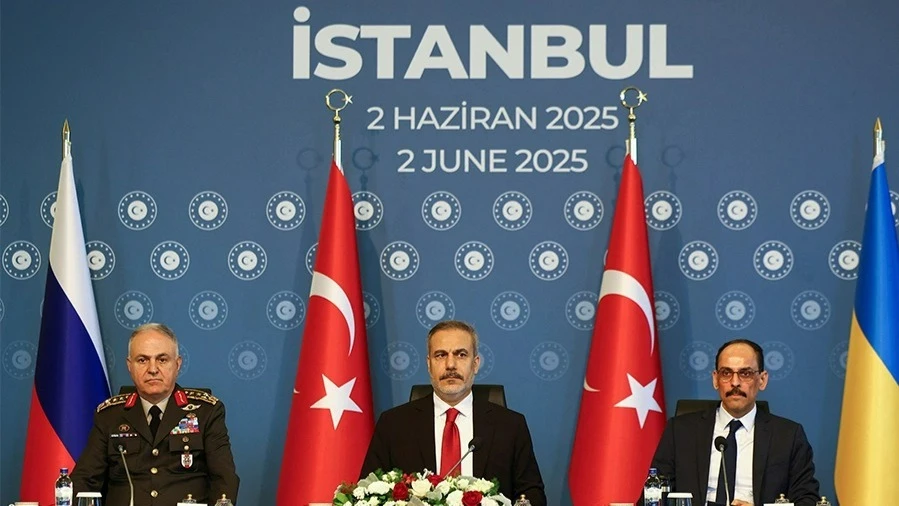
In May of last year, Russian President Vladimir Putin, responding to Ukraine and its allies’ proposal for a 30-day unconditional ceasefire, suggested holding unconditional talks with Kyiv in Istanbul (AP News, 2025a). Ukrainian President Volodymyr Zelensky replied to this proposal by saying, “I am waiting for Putin in Ankara,” and added that he could also meet the Russian president in Istanbul if necessary (AP News, 2025b). Zelensky came to Istanbul and met with Erdoğan. However, when Putin did not attend the May 15 talks and instead sent a lower-level delegation, the negotiations remained at a technical level (The Guardian, 2025), effectively placing a limit on Turkiye’s ambition to host a “leaders’ summit.” This limit demonstrated that the boundaries of Ankara’s peace diplomacy could be defined “within the framework desired by Russia.” The technical talks continued until June 23 and ended without results — Turkiye once again failed to become the center of peace efforts.
Several months later, in November, Russia refused to attend a meeting that the Ukrainian side had announced would take place in Turkiye and would include U.S. representation. Kremlin spokesperson Dmitry Peskov declared that no Russian representative would participate in talks in Turkiye (AA, 2025a). The following day, Erdoğan stated that he believed the Istanbul negotiation process could be relaunched within a comprehensive framework addressing urgent issues. Turkiye simultaneously conveyed that it was ready to evaluate any proposal that could ensure a ceasefire. In response, Moscow issued a general statement saying, “Russia is ready for negotiations, but the problem lies on the Ukrainian side” (AA, 2025b). In effect, Russia set limits on negotiations at two critical junctures in 2025: first, by not allowing Turkiye to host a leaders’ summit; and second, by pushing Turkiye entirely out of the negotiation platform.
Subsequently, the negotiations moved to an entirely new platform. The new center of Russia–Ukraine contacts — also involving the United States — became the United Arab Emirates. In the process that began in January, the UAE leadership took part at the negotiating table alongside the United States, Russia, and Ukraine as host (Emirates News Agency – WAM, January 2026). The second round of talks took place again in Abu Dhabi on February 4–5, resulting in an agreement on the exchange of 314 prisoners (AA, February 5, 2026).
These negotiations, which did not fundamentally differ from those held in Istanbul, demonstrated that the diplomatic initiative had shifted from Turkiye to the Gulf. Although Turkiye declared an ambitious foreign policy vision of assuming a peace mission, in reality it is not a fully trusted party for either side in the Russia–Ukraine conflict. In terms of official diplomatic stance and military cooperation, Ankara stands closer to Ukraine. In terms of trade-economic relations and public diplomacy (including political statements, the “language” of the media, and allowing open space for Russian propaganda), it appears aligned with Moscow (KHAR Center, January 2025). On the other hand, while Ankara refuses to join Western sanctions against Russia and at times even assists Moscow in circumventing them, it simultaneously takes restrictive steps against Russia in order not to cross red lines set by its NATO allies (Ülgen, 2024). From this perspective, Turkiye is not fully neutral for either side.
It is true that the UAE is also not viewed by Ukraine as a neutral platform. Ukrainian experts believe Abu Dhabi is not a mediator but rather a Russian ally, attempting together with the United States to push Kyiv toward capitulation (The News Voice of Ukraine, February 2, 2026). However, what is decisive here is that Washington is the determining actor, which reduces Ankara’s competitive capacity. The Trump administration is attempting to conduct Moscow–Kyiv negotiations within a broader package that includes reviving high-level military cooperation between the United States and Russia, suspended since 2021. This was confirmed by a February 5 statement from U.S. European Command:
“Following the productive and constructive progress achieved last week in Ukraine by Jared Kushner (Trump’s son-in-law — KHAR Center) and Special Envoy Steve Witkoff toward President Trump’s peace objective, the United States and the Russian Federation agreed today in Abu Dhabi to rebuild high-level military cooperation” (EUCOM, February 5, 2026).
In other words, Trump effectively dictates where and in what format the Russia–Ukraine negotiations will take place, and the U.S. administration decides which country will “win” by hosting the process. While Trump speaks positively about Erdoğan on the one hand, on the other he demonstrates that in reshaping the international system he assigns Ankara auxiliary rather than primary roles. On this issue, Putin and Trump’s positions converge.
Where Is Ankara in the Azerbaijan–Armenia Negotiations?
Unlike the previous two conflicts, Turkiye does not claim neutrality in the Azerbaijan–Armenia conflict. Particularly through the military-political-diplomatic support it provided during the Second Karabakh War and through the commitments it undertook within the framework of the Shusha Declaration signed with Baku after the victory, Ankara has formalized its claim to being Azerbaijan’s strategic ally. In the international arena, Turkiye therefore stands as one of the parties to the conflict (or as the closest ally of one side). However, this role is not highly visible in the process of drafting and negotiating the peace text.
After the Karabakh war, normalization talks were conducted for a period along the European Union track. In December 2021, President of the European Council Charles Michel met with Azerbaijani President Ilham Aliyev and Armenian Prime Minister Nikol Pashinyan and announced the objective of achieving a sustainable peace agreement (European Council, 2021). In 2022 and 2023, five rounds of meetings were held under EU leadership.
In 2025, the foreign ministries of Armenia and Azerbaijan announced that negotiations on the draft peace agreement text had been completed (Armenian MFA, Azerbaijani MFA, 2025). At this stage, Turkiye positioned itself as a country supporting the process from the outside while also taking steps toward normalizing bilateral relations with Armenia (France 24, 2025).
Following agreement on the peace text, the next platform for meetings between Azerbaijan and Armenia became the United Arab Emirates (Al Jazeera, 2025). In August 2025, Trump entered the process, meeting with Aliyev and Pashinyan in Washington. In a statement by the U.S. State Department, it was emphasized that the peace agreement text between Azerbaijan and Armenia had been initialed by the foreign ministries and that the commitment to continue the process had been reaffirmed (State.gov, 2025). At this most symbolic moment of the peace process, Ankara once again assumed only a supportive role — the Turkish Ministry of Foreign Affairs stated that it “welcomed with satisfaction” the progress recorded in Washington (Turkish MFA, 2025c).
On February 4, while U.S.–Russia–Ukraine negotiations were continuing in Abu Dhabi, Ilham Aliyev and Nikol Pashinyan met once again (Office of the Armenian Prime Minister, February 4, 2026). The parties agreed to explore opportunities for expanding bilateral trade and economic cooperation. According to the statement released after the meeting, Aliyev and Pashinyan discussed the implementation of the Trump Route for International Peace and Prosperity (TRIPP) project and related initiatives (AA, February 4, 2026).
This effectively demonstrates that Azerbaijan–Armenia normalization has also come under Trump’s supervision and that this factor played a decisive role in selecting Abu Dhabi as the negotiation venue. Turkiye, once again, is not the principal actor but a supporter.
CONCLUSION
The situation across the three conflicts demonstrates that Turkiye’s attempts to assume a central role in the processes have been deflected both by the parties themselves and by Washington, and that Ankara’s role has been limited to the level deemed appropriate by them. In particular, since 2022, Ankara has transformed its claim of peace mediation into one of the main pillars of both its domestic and foreign legitimacy strategy. In reality, however, it is confronted with a completely different picture. In the U.S.–Iran conflict, the role it seeks is not granted to it by Tehran (and in fact also not by the United States). In the Russia–Ukraine negotiations, its ambition to be the principal actor is resisted by both Putin and Trump. In the Azerbaijan–Armenia peace process — in which Turkiye is one of the key players — the symbolic milestones have unfolded along the Brussels–Washington–Abu Dhabi axis.
Erdoğan’s transformation of mediation efforts into a display of grandeur, power, and legitimacy leads some actors to perceive Turkiye as an ambitious force in many arenas — and one that needs to be “neutralized.” For this reason, instead of a country like Turkiye, which turns mediation into a leadership narrative, platforms such as Oman — which creates discreet corridors — or Abu Dhabi — which is seen as manageable and predictable — are preferred. In some cases (as in the Russia–Ukraine war), Ankara’s claim to neutrality lacks credibility for any of the direct parties to the conflict (as well as for its indirect stakeholders). A policy of being friends with everyone ultimately results in being a fully trusted ally of no one.
Finally, it would be incorrect to ignore the objective factor that powers such as the United States, Russia, and Iran do not wish to see Turkiye emerge as a principal actor. If Ankara truly seeks to transform itself into a real power within this reality, it must shift its focus from playing the leading hero in every negotiation to building practical channels that produce measurable results and tangible outcomes.
REFERENCES
Türkiyə XİN, yanvar 2026a. Dışişleri Bakanı Sayın Hakan Fidan’ın TRT Haber’e Verdiği Mülakat. https://www.mfa.gov.tr/disisleri-bakani-sayin-hakan-fidan-in-trt-haber-e-verdigi-mulakat--9-ocak-2026.tr.mfa
Afacan Serhan, 5 fevral 2026. Türkiye’nin girişimleri ABD ile İran’ı ortak bir noktada buluşturabilir mi? https://www.aa.com.tr/tr/analiz/turkiye-nin-girisimleri-abd-ile-iran-i-ortak-bir-noktada-bulusturabilir-mi/3820959
Al Jazeera, yanvar 2026. Top Turkish diplomat says Iran ready to negotiate, warns against US attack. https://www.aljazeera.com/news/2026/1/28/turkiyes-fm-hakan-fidan-says-iran-ready-to-negotiate-over-nuclear-file
Türkiyə XİN, yanvar 2026 b.. Dışişleri Bakanı Sayın Hakan Fidan’ın İran Dışişleri Bakanı Abbas Arakçi ile Ortak Basın Toplantısı. https://www.mfa.gov.tr/disisleri-bakani-sayin-hakan-fidan-in-iran-disisleri-bakani-abbas-arakci-ile-ortak-basin-toplantisi--30-ocak-2026.tr.mfa
Axios, 2 fevral 2026. U.S.-Iran nuclear talks planned for Friday amid military buildup. https://www.axios.com/2026/02/02/iran-nuclear-talks-trump-military
Haber 7, 3 fevral 2026. İran'dan İstanbul çıkışı. Görüşmeler o ülkeye taşındı. https://www.haber7.com/dunya/haber/3601500-irandan-istanbul-cikisi-gorusmeler-o-ulkeye-tasindi
Euronews, 4 fevral 2026. Iran and US agree to high-stakes nuclear talks in Oman, Iranian foreign minister says. https://www.euronews.com/2026/02/04/iran-and-the-us-to-hold-nuclear-talks-friday-in-oman-iranian-foreign-minister-says
Deutche Welle, 5 fevral 2026. İran-ABD görüşmeleri neden Türkiyeden Ummana kaydı? https://www.dw.com/tr/i%CC%87ran-abd-g%C3%B6r%C3%BC%C5%9Fmeleri-neden-t%C3%BCrkiyeden-ummana-kayd%C4%B1/a-7581738
Wintour Patrick və Roth Andrew, 4 fevral 2026. US and Iran talks brought back from the brink after White House relents on move to Oman. https://www.theguardian.com/world/2026/feb/04/us-iran-talks-risk-collapse-oman-move-rejected
Chaziza Mordechai; Lutmar Carmela, 2025. Oman’s Niche Diplomacy: Middle Power Strategies in a Shifting Middle East. https://www.mdpi.com/2076-0760/14/9/511
Campbell-James Jonathan, 2025. Why Oman: explaining choice of venue for US-Iran talks. https://www.lowyinstitute.org/the-interpreter/why-oman-explaining-choice-venue-us-iran-talks
Altunışık Meliha; Cuhadar Esra, 2010. Turkey’s Search for a Third Party Role in Arab–Israeli Conflicts: A Neutral Facilitator or a Principal Power Mediator? https://repository.bilkent.edu.tr/server/api/core/bitstreams/2ddf34f2-7100-4fdd-a840-fd7feee5049a/content
Cumhuriyet, 5 fevral 2026. İran’da uzlaşı çabalarını eski Tahran Büyükelçisi Ümit Yardım Cumhuriyet’e değerlendirdi: ‘Türkiye NATO üyesi olduğu için görüşmelere ev sahipliği yapması zordu’. https://www.cumhuriyet.com.tr/dunya/iran-da-uzlasi-cabalarini-eski-tahran-buyukelcisi-umit-yardim-cumhuriyet-e-degerlendirdi-turkiye-nato-uyesi-oldugu-icin-gorusmelere-ev-sahipligi-yapmasi-zordu-2476053
Daily Sabah, 5 fevral 2026. Erdoğan hails US-Iran talks, stresses avoidance of new wars in region. https://www.dailysabah.com/politics/diplomacy/erdogan-hails-us-iran-talks-stresses-avoidance-of-new-wars-in-region
Yeni Akit, 4 fevral 2026. Savaş kapılarında bağırıyor ama onların derdi: Ankara’nın popülaritesi artmasın! İran yönetiminden Türkiye hazımsızlığı. https://www.yeniakit.com.tr/haber/ankaranin-popularitesi-artmasin-iran-yonetiminden-turkiye-hazimsizligi-1981103.html
Associated Press, 2025, a. Russia’s Putin proposes direct talks with Ukraine in Istanbul on May 15, ‘without preconditions’. https://apnews.com/article/russia-ukraine-war-fbd6aa9ddb147fa1b789c30dcf44dab3
Associated Press, 2025 b. Zelenskyy says he will be waiting for Putin in Ankara on Thursday for talks. https://apnews.com/article/russia-ukraine-war-putin-zelenskyy-istanbul-b4a256f946ce892d6b2a7dfb0f3fba5b
The Guardian, 2025. Ukraine war live: first direct talks between Moscow and Kyiv in three years set to begin in Turkey – as it happened. https://www.theguardian.com/world/live/2025/may/15/ukraine-war-live-first-direct-talks-between-moscow-and-kyiv-in-three-years-set-to-begin-in-turkey
Anadolu Agentliyi, 2025 a. Kremlin says Russia will skip Wednesday’s Ukraine talks in Türkiye. https://www.aa.com.tr/en/russia-ukraine-war/kremlin-says-russia-will-skip-wednesday-s-ukraine-talks-in-turkiye/3746976
Anadolu Agentliyi, 2025 b. Russia signals readiness for talks after Turkish president's call to revive Istanbul negotiations. https://www.aa.com.tr/en/russia-ukraine-war/russia-signals-readiness-for-talks-after-turkish-presidents-call-to-revive-istanbul-negotiations/3748577
Emirates News Agency - WAM, yanvar 2026. UAE President meets heads of delegations participating in US-Russia-Ukraine trilateral talks. https://www.wam.ae/en/article/bydfo8t-uae-president-meets-heads-delegations
Anadolu Agentliyi, 5 fevral 2026. Witkoff says Russia and Ukraine agree to exchange 314 prisoners of war. https://www.aa.com.tr/en/russia-ukraine-war/witkoff-says-russia-and-ukraine-agree-to-exchange-314-prisoners-of-war/3821278.
KHAR Center, yanvar 2026. Türkiyənin Rusiya–Ukrayna müharibəsinə yanaşması və propaqanda mühiti: Strateji muxtariyyət, yoxsa asimmetrik asılılıq? https://www.kharcenter.com/arasdirmalar/turkiyenin-rusiya-ukrayna-muharibesine-yanasmasi-ve-propaqanda-muhiti-strateji-muxtariyyet-yoxsa-asimmetrik-asililiq
Ülgen Sinan, 2024. Türkiye and Russia: An Unequal Partnership. https://carnegieendowment.org/research/2024/10/turkiye-and-russia-an-unequal-partnership
The New Voice of Ukraine (NV), 2 fevral 2026. Analyst: Abu Dhabi not neutral, Ukraine pushed to capitulate. https://english.nv.ua/nation/negotiations-in-uae-preobrazhensky-explains-why-abu-dhabi-is-not-neutral-platform-amid-pressure-50580375.html
EUCOM (U.S. European Command (Public Affairs)), 5 fevral 2026. The U.S. and Russian Federation agreed to reestablish high-level military-to-military dialog. https://www.eucom.mil/pressrelease/44261/the-us-and-russian-federation-agreed-to-reestablish-high-level-military-to-military-dialog
European Council, 2021. Statement of President Charles Michel following the trilateral meeting with President Ilham Aliyev and Prime Minister Nikol Pashinyan. https://www.consilium.europa.eu/en/press/press-releases/2021/12/14/statement-of-president-charles-michel-following-the-trilateral-meeting-with-president-ilham-aliyev-and-prime-minister-nikol-pashinyan/
Ermənistan XİN, 2025. MFA Statement. https://www.mfa.am/en/interviews-articles-and-comments/2025/03/13/mfa_statement/13114
Azərbaycan XİN, 2025. No:105/25, Statement on conclusion of the negotiations on the text of the draft Agreement on Peace and the Establishment of Interstate Relations between Azerbaijan and Armenia. https://mfa.gov.az/en/news/no10525
France 24, 2025. Armenian PM Pashinyan arrives in Turkey for historic visit. https://www.france24.com/en/middle-east/20250620-armenian-pm-pashinyan-arrives-in-turkey-for-historic-visit
Al Jazeera, 2025. Armenia, Azerbaijan leaders meet for peace talks in UAE, no breakthrough. https://www.aljazeera.com/news/2025/7/10/draft-deal-to-end-bitter-conflict-agreed-4-months-ago-but-timeline-for-sealing-complex-deal-remains-uncertain
U.S. Department of State, 2025. Joint Declaration (Azerbaijan and the Republic of Armenia). https://www.state.gov/wp-content/uploads/2025/08/2025JointDeclaration.AzerbaijanArmenia.pdf
Türkiyə XİN, 2025 c. No: 167, Regarding the Peace Process Between Azerbaijan and Armenia. https://www.mfa.gov.tr/no_-167_-azerbaycan-ve-ermenistan-arasindaki-baris-sureci-hk.en.mfa
Ermənistan Baş Nazirliyi, 4 fevral 2026. Prime Minister of Armenia, President of Azerbaijan meet in Abu Dhabi. https://www.primeminister.am/en/press-release/item/2026/02/04/Nikol-Pashinyan-met-with-Ilham-Aliyev/
Anadolu Agentliyi, 4 fevral 2026. Azerbaijan, Armenia agree to further explore opportunities to expand trade, economic cooperation. https://www.aa.com.tr/en/world/azerbaijan-armenia-agree-to-further-explore-opportunities-to-expand-trade-economic-cooperation/3819867
