Introduction
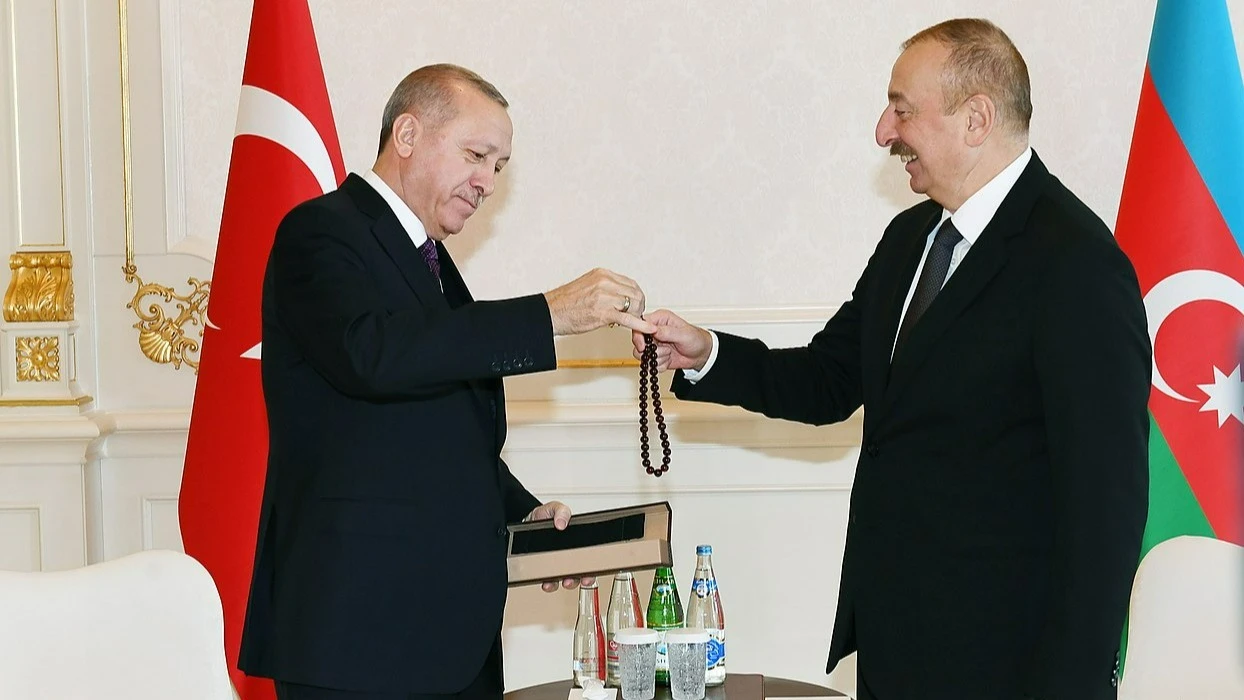
The Iran crisis has exposed the hidden cracks that have emerged in recent years in relations between official Baku and Ankara. The missiles and drones launched from Iran on March 4 toward Türkiye and on March 5 toward Azerbaijan struck, above all, the relations between the two strategic allied countries. Türkiye pointed to a specific origin for the missile launched from Iranian territory, yet chose a softer rhetoric and limited itself to the message of “consultations with NATO” (Khar Center, 5 March 2026). Azerbaijan’s reaction, however, was very harsh — Ilham Aliyev responded with a speech filled with extremely severe expressions such as “dishonorable,” “ungrateful,” “unmanly,” and “scoundrels” (President.az, 5 March 2026). This speech revealed long-existing but largely concealed dissatisfaction in Turkish public opinion toward the Azerbaijani government. Official Baku’s policy of “balancing” between Israel and Türkiye collided with Iranian drones and anti-Israeli sentiment in Türkiye.
In this article, Khar Center analyzes how the warm relations between the governments of Türkiye and Azerbaijan — built upon the lines of military, political, and economic cooperation during the Second Karabakh War — are being tested by the Iran war.
Research Question
How does the Iran crisis affect Türkiye–Azerbaijan relations, and to what extent does this event reveal structural contradictions between the foreign policies of the two countries?
The Memory of the Recent Past: The Ups and Downs of Erdoğan–Aliyev Relations
“We listened to the same tales throughout history, we grew up with the same folk songs, we were moved by the same music and rhythms, we played the same games and had fun together. As the founder of our Republic Mustafa Kemal Atatürk said in 1920 when Azerbaijan fell into the hands of the Bolsheviks: Azerbaijan’s sorrow is our sorrow, and its happiness is our happiness. The grave of Azerbaijan’s founder, Mehmed Emin Resulzade, is in Ankara…” (Transcript of the National Assembly of Azerbaijan, 2009).
The Turkish Prime Minister Recep Tayyip Erdoğan began the main part of his speech in the Azerbaijani parliament in May 2009 with these sentences, following several months of tension between Ankara and Baku. This was a first — Erdoğan, who had supported Ilham Aliyev since he came to power, mentioned the name of Azerbaijan’s true founder six years later in a speech, replacing the emphasis on “Atatürk–Heydar Aliyev” with the phrase “Atatürk–Resulzade.”
Relations between Azerbaijan and Türkiye experienced one of their most tense periods in recent history during the 2009 crisis, when the clash of political interests in a process that also involved Russia became a serious test for the rhetoric of brotherhood. The “football diplomacy” that began in late 2008 and involved the normalization of Türkiye–Armenia relations (Reuters, 2008) very quickly led to tensions between Ankara and Baku. The tension that began in the media spread to political and diplomatic relations after a roadmap for normalization protocols was announced in April 2009.
Despite Türkiye’s statements that Azerbaijan had been informed at every stage of the normalization process (RFE/RL, 2009), tensions continued to escalate. The Turkish Mosque in Baku was closed under the pretext of renovation (RFE/RL, 2009). Ilham Aliyev refused to attend the Alliance of Civilizations summit held in Istanbul (APA, 2009). Visits to Baku by the Turkish president and foreign minister produced no results.
Against this backdrop, Recep Tayyip Erdoğan traveled to Baku and, after meeting with Ilham Aliyev, addressed the Azerbaijani parliament, stating that Türkiye would not open its borders with Armenia as long as Baku did not want it, and that a storm had been created in a glass of water. In that emotional speech, he did not mention Heydar Aliyev even once, nor did he attribute the slogan “one nation – two states” to the Aliyev legacy.
Subsequent developments showed that Erdoğan’s reference to Resulzade was not a turning point in Ankara’s historical-political discourse, but rather a temporary rhetorical shift caused by tensions with Baku at the time. The emphasis on Resulzade appeared more as a sign that there was no political consensus in Baku at that moment.
Further evidence emerged in October 2009, when the Zurich protocols were signed between Armenia and Türkiye and the Turkish flag was removed from the Turkish Martyrs’ Cemetery in Azerbaijan (ESI, 2009). Ilham Aliyev also threatened to seek alternatives to Türkiye for energy transit to Europe (Socor, 2009).
Relations began to warm again in May 2010 with Erdoğan’s visit to Azerbaijan and Aliyev’s visit to Türkiye in June. A decision was taken to establish the Strategic Cooperation Council. Aliyev’s transit threats were forgotten, and instead a new stage in the Erdoğan–Aliyev partnership began with new gas agreements. In his speech in Baku, Erdoğan this time placed Heydar Aliyev’s phrase “One nation, two states” alongside Atatürk’s words: “Azerbaijan’s joy is our joy, its sorrow is our sorrow” (Dünya Gazetesi, 2020; Habertürk, 2010).
It would not be correct to say that Mehmed Emin Resulzade, the founder of the Azerbaijan Democratic Republic, has never appeared in Türkiye’s official discourse. Symbolic commemorations have always taken place on significant anniversaries. Erdoğan also occasionally mentions Resulzade in his speeches, but not in the form of recognizing him as the founder of the Azerbaijani state; rather, he repeats Resulzade’s famous slogan: “The flag once raised will never fall again” (Communications Directorate, 2020).
However, in recent days — against the background of the Iran–Israel war — Resulzade’s name has begun to appear much more frequently in official and public circles in Türkiye in the discourse of commemorating him as the founder of the Azerbaijani state. On March 6, the anniversary of Resulzade’s death was marked with a level of activity on social media within Türkiye’s pro-government segment that was more vocal than ever before (X – YTB, TRT Haber, TRT Avaz, 6 March 2026).
This situation, which appears as an emotional result of tensions between the two governments on social media, strongly resembles Erdoğan’s 2009 Resulzade speech.
The Israeli Rift Within the Karabakh Brotherhood
After 2010, a new energy-centered phase in Türkiye–Azerbaijan relations quickly overshadowed the tense rhetoric of 2009. For nearly a decade, projects such as TANAP, the Southern Gas Corridor, SOCAR’s massive investments in Türkiye, and coordination in gas exports to Europe formed the central line of bilateral relations.
This line satisfied both Erdoğan and Aliyev, because the energy sector could easily serve as camouflage for personal economic and political interests.
The 2020 Karabakh War marked the peak of this rise in terms of both the strategic nature of Türkiye–Azerbaijan relations and the interests linking the Erdoğan and Aliyev governments. Strategic relations were institutionalized in 2021 through the Shusha Declaration, which also created a framework strengthening the “national interest” label in Aliyev’s domestic politics and emphasizing the security discourse.
The strengthening of the personal family capital of both leaders — including the activities in Azerbaijan of companies linked to businessmen close to Erdoğan’s government (known as the “gang of five”) and the open and hidden investments of the Aliyev family in Türkiye — was also included in this “national interest” package. The security guarantee of this package was the authoritarian governance existing in both countries (Khar Center, January 2026).
However, the rising “brotherhood” line between the Azerbaijani and Turkish governments entered a new test phase in 2023, when one of the largest conflict zones in the Middle East erupted — the Israel–Palestine war.
At first this did not appear problematic, since Ankara was also demonstrating a desire to maintain the relations it had begun to normalize with Israel in 2022. However, from the second week of the conflict onward, Erdoğan returned to his earlier anti-Israel rhetoric. As the conflict dragged on, his rhetoric hardened further, and this increasingly harsh tone, rising in parallel with Israel’s military escalation, turned into a foreign policy line that generated political costs for the Turkish government.
After suffering the greatest defeat of his political career in the March 31, 2024 municipal elections, and even being accused of contradictions between words and actions by ideologically close circles, Erdoğan could not resist public pressure to cut economic ties with Israel (Çevik, 2024). In May 2024 Ankara announced the complete termination of economic relations with Tel Aviv (Turkish Ministry of Trade, 2024).
Ilham Aliyev, by contrast, chose to further strengthen relations with Israel.
Relations between Azerbaijan and Israel have never been poor, but especially since 2020 they have developed along an upward trajectory similar to Türkiye–Azerbaijan relations. Israel is Azerbaijan’s largest arms supplier and one of its main supporters during the Karabakh war, while Azerbaijan is Israel’s largest supplier of oil.
After opening an embassy in Israel in 2023, Azerbaijan ignored Turkish pressure to halt energy exports after the war began and increased oil supplies to Israel through the Baku–Tbilisi–Ceyhan pipeline, taking advantage of Ankara’s inability to control the final destination of exported oil (Besa, 2025).
By the end of 2025, Israel’s imports of Azerbaijani crude oil through the Baku–Tbilisi–Ceyhan pipeline had increased by 31% compared with the previous year, reaching 94,000 barrels per day, the highest level since 2022. In 2025 Azerbaijan accounted for 46.4% of Israel’s oil supply (JNS, January 2026).
SOCAR’s purchase of a 10% stake worth $900 million in Israel’s Tamar natural gas field, as well as winning a new gas exploration tender in Israeli waters together with BP, represents another example of the level reached in relations between the two countries in 2025 (Besa, 2025).
Although the Azerbaijani and Turkish leaders have made significant efforts to conceal this rift, tensions over Israel had already affected relations between the two strategic allies even before the latest events.
One example occurred in 2024, when Erdoğan stated — referring to Israel — that “just as we entered Libya and Karabakh, we could do the same to them.” For several days afterward, supporters of Erdoğan and Aliyev engaged in social-media debates over “who liberated Karabakh” and “who was the real hero.”
This discussion acquired official status through an accusatory article published in Azerbaijan’s official state newspaper.
The article stated:
“Currently, in certain circles of Turkish society and media outlets, claims are being made regarding the participation of other countries in the liberation of Azerbaijan’s territories from occupation. Unfortunately, the Turkish media has once again ignored issues that concern society and created a new artificial agenda. The interpretation of the well-known statement about allegedly intervening militarily in Israel and ‘entering Jerusalem as they once entered Karabakh’ is being carried out in a biased direction, the truth is being distorted, and an openly pro-Armenian position is being expressed.”
The article included statements such as:
- “We paid for every piece of ammunition down to the last penny,”
- “Such statements pour water on the Armenian mill,”
- “They are appropriating the victory of our people, our army, and our commander.”
It also turned Erdoğan’s 2009 “storm in a teacup” expression against him in a different form:
“These ‘initiatives,’ built on lies and attempting to create a ‘storm in a glass of water,’ have no foundation and represent the greatest harm to the interests of peoples who stand by each other in difficult times.”
(Azerbaijan newspaper, 2024)
Considering that “Azerbaijan” newspaper is an official state publication and has no independent editorial line, this article showed that tensions between Türkiye and Azerbaijan were not merely an emotional dispute over “sharing the victory,” but rather reflected a deeper rift between the two strategic allies.
This rift also manifested itself in the failure of the visits of Israeli President Isaac Herzog in November 2024 and Israeli Prime Minister Benjamin Netanyahu in May 2025 to Baku. According to reports, both visits failed because Türkiye did not grant overflight permission through its airspace (Besa, 2025).
From the “Heroic” Son-in-Law to the “Traitorous” Son-in-Law
Despite these episodes, until the outbreak of the Iran war the Israel-related tensions between Azerbaijan and Türkiye had not clearly exceeded the boundaries of mutual tolerance between the two sides. At times, reports even emerged suggesting that Azerbaijan was mediating between Türkiye and Israel (Al Arabiya, 2025).
However, Ilham Aliyev’s high-toned statement regarding Iran’s drone attack on Nakhchivan was widely interpreted in Turkish public opinion as an unequivocally pro-Israeli position. Media outlets, experts, and even politicians across a wide spectrum — both pro-government and opposition — linked Aliyev’s harsh statements to his close relations with Israel (X, Faruk Loğoğlu, 6 March 2026). Even discussions about whether Iran had actually targeted Azerbaijani territory were quickly overshadowed by accusations regarding official Baku’s relations with Israel (X, Mücahid Birinci, 6 March 2026; Şamil Tayyar, 7 March 2026; Mehmet Metiner, 7 March 2026). For the first time in a long period, numerous posts appeared on Turkish social media describing the Aliyev government as corrupt and authoritarian. The situation escalated further when supporters of Ilham Aliyev joined the “social media war” with counter-accusations.
The growing tensions, which in the first days had been limited to social media, eventually compelled the Turkish side to issue an official statement. On March 7, the Center for Combating Disinformation under the Presidential Communications Directorate (İletişim Başkanlığı) issued a statement noting that posts containing excessive criticism, disinformation, and provocations directed against Türkiye–Azerbaijan relations and Azerbaijan had been spreading across certain platforms, particularly social media, and called for caution against such content (AA, 7 March 2026).
After this statement, the process was expected to calm down. However, developments suggest that the Erdoğan–Aliyev “friendship” is now also being tested by what Baku perceives as an information offensive. Baku’s reaction indicates that the criticism directed at the Aliyev government in Turkish public opinion was interpreted not simply as a spontaneous public reaction but as a campaign encouraged by the ruling political circles in Ankara. The Aliyev government and its media outlets accuse a member of Erdoğan’s family — his son-in-law Berat Albayrak — of being responsible for the tension.
Musa Guliyev, a member of the Executive Board of the New Azerbaijan Party and a member of parliament, stated that Turkish President Erdoğan’s son-in-law, former economy minister Berat Albayrak, was the organizer of the anti-Azerbaijan (anti-Ilham Aliyev) campaign in Türkiye:
“If we look at the agenda of one of the leading media groups, the Turkuvaz media group, it becomes clear that this group is systematically conducting a campaign of slander and defamation against Azerbaijan. Azerbaijan is being deliberately discredited and the leadership of our country is being insulted. What is surprising, however, is that the head of the Turkuvaz group, Berat Albayrak, is a member of President Erdoğan’s family” (Bizim Yol, 7 March 2026).
The accusations did not remain limited to Musa Guliyev’s interview. Media outlets loyal to Aliyev launched a broader “attack” against Berat Albayrak and media organizations close to Erdoğan. The deputy editor-in-chief of the official state newspaper Azerbaijan wrote on social media: “Behind the anti-Azerbaijan campaigns in Türkiye stand Berat Albayrak and his Turkuvaz Media Group. This disinformation is neither his first nor his last provocation” (X, Ixtiyar Hüseynli, 8 March 2026).
An article published on the Qafqazinfo website under the title “Berat Albayrak also demonstrates his hostility toward Azerbaijan in his speeches,” written by Mushfig Alasgarli, a member of the Executive Board of the Press Council, accused Erdoğan’s son-in-law of organizing provocations against SOCAR in Türkiye in 2025 (Qafqazinfo, 8 March 2026).
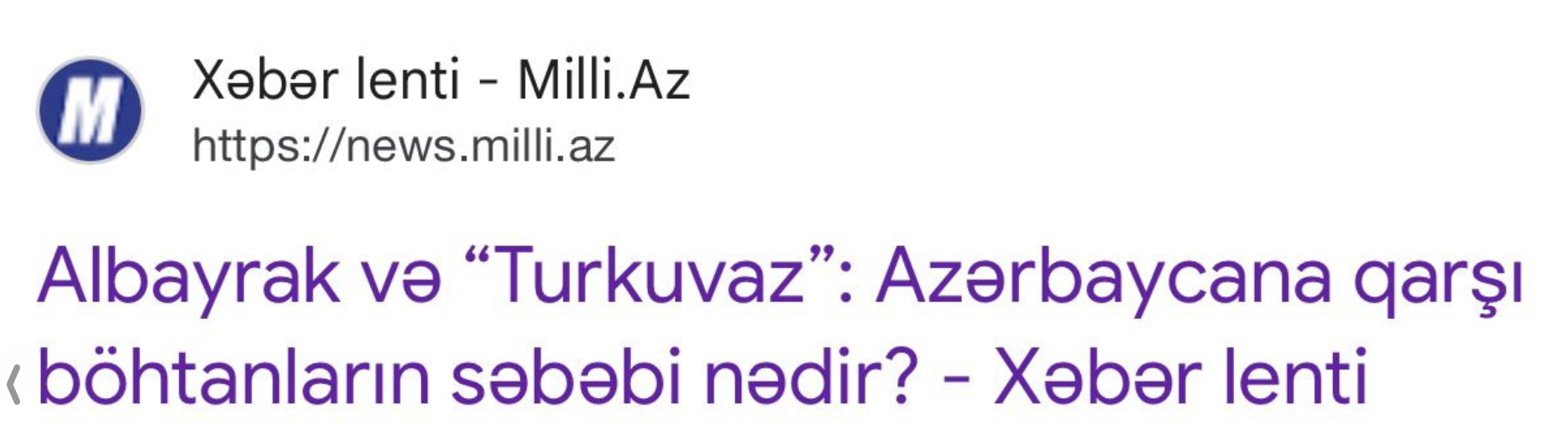
The website Milli.az wrote that the anti-Azerbaijan activities of the Turkuvaz group — which includes media outlets such as the Sabah newspaper and A Haber and is led by Berat Albayrak’s brother Serhat Albayrak — were not new, but rather constituted a systematic information pattern that had already been officially protested by Baku during 2025–2026. The article also extensively recalled “the scandal in Türkiye concerning the 128 billion dollars in foreign currency reserves during the period when Berat Albayrak served as minister,” emphasizing that the narratives directed against Azerbaijan were not coincidental (Milli.az, 7 March 2026).
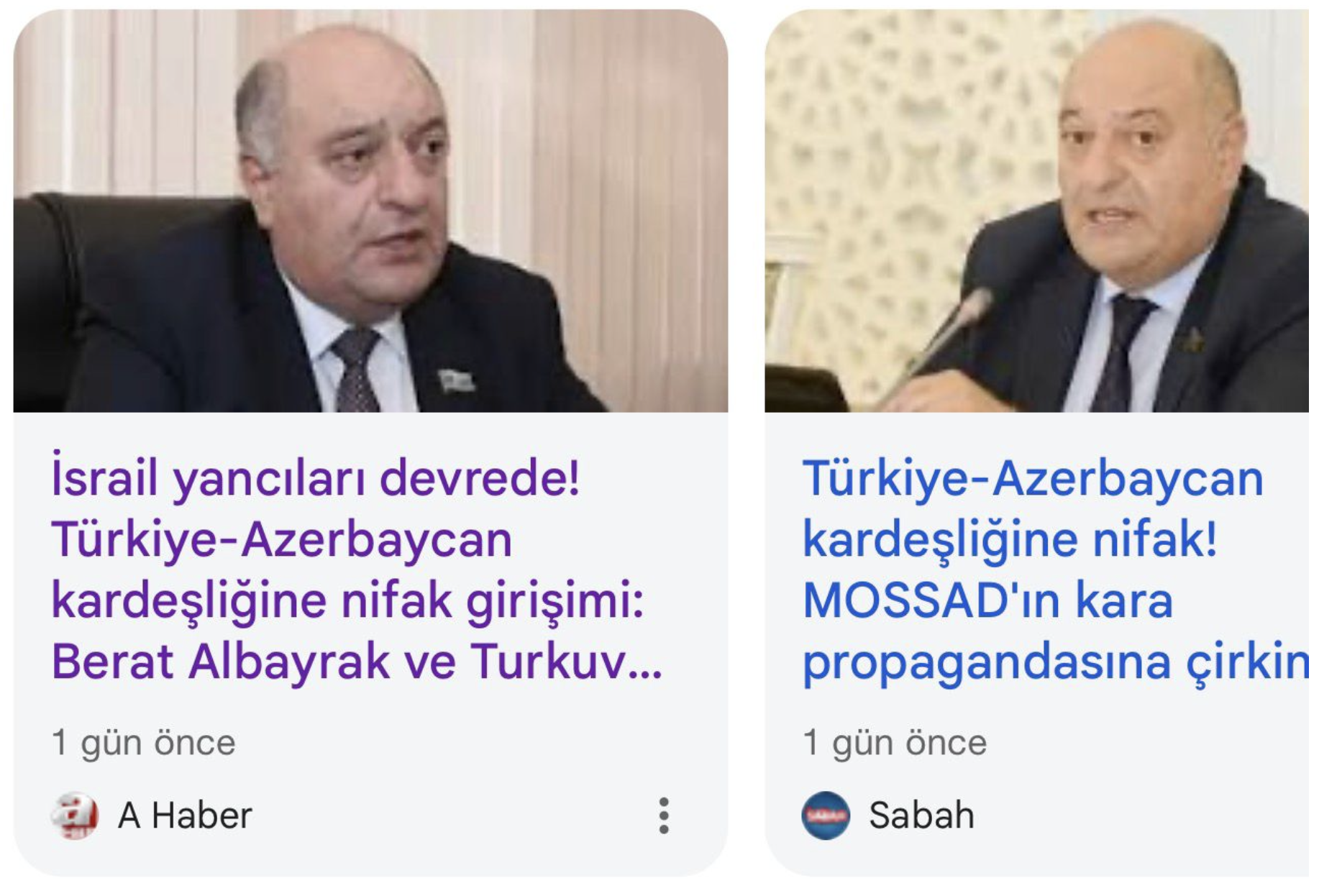
Media outlets belonging to the Turkuvaz group, including A Haber, Daily Sabah, and others, described the accusations originating in Azerbaijan following Musa Guliyev’s statements as “dirty propaganda of Mossad” (A Haber, 8 March 2026), and emphasized that these accusations deliberately targeted Erdoğan’s family (Daily Sabah, 8 March 2026).
As a result, a highly contradictory picture has emerged. Ilham Aliyev, who awarded one of Erdoğan’s sons-in-law — Selçuk Bayraktar — with several orders and medals and declared him a hero for his services during the Karabakh war (President.az, 2021; AA, 2023), has now labeled the other son-in-law, Berat Albayrak, an enemy. This situation not only demonstrates the fragility of the foundations of the Türkiye–Azerbaijan strategic alliance, but also appears as one of the dangerous consequences of the personalization of relations — their reduction to the level of ruling elites.
Another indication that relations have descended to the level of personal “settling of scores” is the removal of articles concerning Berat Albayrak after the phone conversation between Ilham Aliyev and Recep Tayyip Erdoğan on March 9 (TRT Haber, 10 March 2026). In the Azerbaijani media, with one or two exceptions, Musa Guliyev’s interviews were removed from almost all websites (including APA, Lent.az, Yeni Müsavat, Qafqazinfo, and Milli.az). At the same time, in Türkiye, responses published in the newspaper Sabah and on A Haber addressing the accusations directed at Albayrak were also deleted (Haber Sol, 10 March 2026). Now only the headlines of those news items appear in Google search results.
Conclusion
The picture revealed by the Iran crisis shows that the problem in Erdoğan–Aliyev relations is deeper than the mutual social media “conflict” observed in recent days. It is clear that the issue is not merely the tone of Ilham Aliyev’s statements regarding Iran. In its nature, the problem is even deeper than the protocol and flag crisis of 2009. Especially after 2010, the relations between the ruling elites of the two countries — which overlapped in terms of energy cooperation, economic interests, security considerations, and the needs of authoritarian governance, and were further strengthened by the strategic alliance between the two states — have now encountered a major geopolitical fracture. Although Ankara and Baku’s opposing positions toward Israel had continued in parallel for three years while trying not to confront each other directly, the Iran war has disrupted this parallelism and brought to the surface an atmosphere of mutual suspicion and a deficit of trust. Attitudes toward Israel have become the most important dividing line between the two countries.
For a long time, Israel-related rhetoric has been a matter of domestic politics, ideological legitimacy, and regional leadership for Ankara, and since 2023 it has become an especially sensitive issue. As a result of Israel’s aggression in Gaza, anti-Israel sentiment in Turkish public opinion is not limited to the ruling authorities. Even the criticism of Hamas that was observed among parts of the opposition and society during the first days of the war disappeared after a short time, and today there exists a broad consensus in opposition to Israel. Türkiye is a country where anti-Israel sentiment is particularly high (Pew Research, 2025).
For Azerbaijan, however, Israel is not an ordinary partner; it is one of the main strategic pillars providing security, arms supply, energy export opportunities, and additional maneuverability in international relations. This line has strengthened even further with Ilham Aliyev’s rapprochement with the Trump administration — the Azerbaijani leadership sees itself within the Trump–Netanyahu club and does not feel any need to conceal this in any way.
In other words, the problem between Ankara and Baku is not merely a difference in rhetoric but reflects deeper contradictions. This picture, along with the character of the Azerbaijani government, shows the following: if Ilham Aliyev’s government were faced with a dilemma of choosing between Türkiye and Israel, it would be more inclined to choose the latter. Undoubtedly, Ankara is aware of this. However, it does not wish to damage the energy relations with Azerbaijan that have intensified since 2010, nor the rhetoric of brotherhood and alliance that has strengthened since 2020 (as well as the shared business pyramid). For this reason, the Turkish government behaves more cautiously toward Azerbaijan.
The Azerbaijani government, on the contrary, draws confidence from its warming relations with the United States and Israel and therefore speaks to Türkiye in a higher tone.
The main problem here is the risk that this tension between the Aliyev and Erdoğan governments — which until now have built their relations upon the needs of their authoritarian governance — could damage the strategic alliance and create an atmosphere of mutual distrust between the societies of the two countries. At the current stage, the tensions between Türkiye and Azerbaijan may pass. However, it remains a very serious question how relations that have long been sustained through the rhetoric of brotherhood will withstand the next geopolitical tests in the world and in the region.
References:
KHAR Center, 2026. Türkiyənin İran Dilemması. https://www.kharcenter.com/ekspert-serhleri/turkiyenin-iran-dilemmasi
Prezident.az, 5 Mart 2026. İlham Əliyevin sədrliyi ilə Təhlükəsizlik Şurasının iclası keçirilib. https://president.az/az/articles/view/71792
Azərbaycan Respublikası Milli Məclisi, 2009. 13.05.2009 - tarixli iclasın stenoqramı. https://meclis.gov.az/news-cari.php?id=110&lang=az
Reuters, 2008. Turkey's Gul makes landmark Armenia visit. https://www.reuters.com/article/economy/turkeys-gul-makes-landmark-armenia-visit-idUSL6345007/
RFE/RL, 2009a. The Turkish-Armenian Thaw and Azerbaijan. https://www.rferl.org/a/The_TurkishArmenian_Thaw_and_Azerbaijan/1608216.html
RFE/RL, 2009b. Turkish Mosque In Baku Closed For 'Repairs'. https://www.rferl.org/a/Turkish_Mosque_In_Baku_Closed_For_Repairs/1617374.html
APA, 2009. Azerbaijani President refuses to attend the “Alliance of Civilizations” project meeting in Turkey - EXCLUSIVE. https://en.apa.az/foreign-policy/-99791
European Stability Initiative (ESI), 2009. The Unknown Turk and a Future Referendum. https://www.esiweb.org/pdf/esi_picture_story_-_turkish_armenian_relations_-_august_2009.pdf
Vladimir Socor, 2009. Turkey: a Bridge or Bottleneck for Caspian Gas to Europe? https://jamestown.org/turkey-a-bridge-or-bottleneck-for-caspian-gas-to-europe/
Dünya Gazetesi, 17 may 2010. Türkiye ve Azerbaycan iki ayrılmaz kardeş. https://www.dunya.com/gundem/turkiye-ve-azerbaycan-iki-ayrilmaz-kardes-haberi-114461
Habertürk, 15 sentyabr 2010. Türkiye-Azerbaycan arası anlaşma imzalandı. https://www.haberturk.com/gundem/haber/552199-turkiye-azerbaycan-arasi-anlasma-imzalandi?page=2
İletişim Başkanlığı, 2020. Cumhurbaşkanı Erdoğan: “İslam düşmanlığı ile mücadele etmek, hem inancımızın hem de yurt dışındaki vatandaşlarımıza karşı sorumluluğumuzun bir gereğidir”. https://www.iletisim.gov.tr/turkce/haberler/detay/cumhurbaskani-erdogan-islam-dusmanligi-ile-mucadele-etmek-hem-inancimizin-hem-de-yurt-disindaki-vatandaslarimiza-karsi-sorumlulugumuzun-bir-geregidir?
YTB, 6 mart 2026. X profili. https://x.com/yurtdisiturkler/status/2029874649929036032
TRT Haber, 6 mart 2026. X profili.
https://x.com/trthaber/status/2029768940231004575
TRT Avaz, 6 mart 2026. X profili. https://x.com/trtavaz/status/2029829343300419985
KHAR Center, 2026. Bakı–Ankara–Moskva üçbucağında asimmetrik asılılıq: rejim təhlükəsizliyi və xarici siyasət. https://www.kharcenter.com/arasdirmalar/baki-ankara-moskva-ucbucaginda-asimmetrik-asililiq-rejim-tehlukesizliyi-ve-xarici-siyaset
Çevik,Salim, 2024. Turkey’s Reconciliation Efforts in the Middle East. https://www.swp-berlin.org/publikation/turkeys-reconciliation-efforts-in-the-middle-east
T.C. Ticaret Bakanlığı, 2024. İsrail ile ticaret iddialarına ilişkin basın açıklaması. https://ticaret.gov.tr/haberler/israil-ile-ticaret-iddialarina-iliskin-basin-aciklamasi
BESA Center, 2025. The Baku Process: An Open Triangle in Israel–Azerbaijan–Turkey Relations. https://besacenter.org/the-baku-process-an-open-triangle-in-israel-azerbaijan-turkey-relations/
JNS, 2026. Israel’s imports of Azerbaijani oil hit three-year high. https://www.jns.org/israels-imports-of-azerbaijani-oil-hit-three-year-high/
Azərbaycan qəzeti, 2024. Qarabağ zəfərinin müəllifi Müzəffər Ali Baş Komandan və Azərbaycan Ordusudur. https://www.azerbaijan-news.az/az/posts/detail/qarabag-zeferinin-muellifi-muzeffer-ali-bas-komandan-ve-azerbaycan-ordusudur-1722458765
Al Arabiya English, 3 iyun 2025. Azerbaijan’s Quiet Diplomacy Between Turkey and Israel. https://english.alarabiya.net/News/middle-east/2025/06/03/azerbaijan-s-quiet-diplomacy-between-turkey-and-israel
Faruk Loğoğlu, 6 Mart 2026. X statusu. https://x.com/OFarukLogoglu/status/2029779556509401426
Mücahit Birinci, 6 mart 2026. X statusu. https://x.com/birincimucahit/status/2029991950049497274
Şamil Tayyar, 6 mart 2026. X statusu. https://x.com/samiltayyar27/status/2030054658111345063
Mehmet Metiner, 7 mart 2026. X statusu. https://x.com/MetinerBasin/status/2030226143958175782
Anadolu Ajansı, 7 mart 2026. DMM'den Türkiye-Azerbaycan ilişkilerine ve Azerbaycan'a yönelik provokasyon içeren paylaşımlara ilişkin açıklama. https://www.aa.com.tr/tr/gundem/dmmden-turkiye-azerbaycan-iliskilerine-ve-azerbaycana-yonelik-provokasyon-iceren-paylasimlara-iliskin-aciklama/3854186
Bizim Yol, 7 mart 2026. Musa Quliyev: TBMM-ə sığınaraq ölkələrimizin birliyinə xələl gətirən şəxsin "toxunulmazlığı" ləğv edilməlidir. https://bizimyol.info/az/news/578456.html
İxtiyar Hüseynli, 8 mart 2026. X statusu. https://x.com/ixtiyarhuseynli/status/2030628287538692367
Qafqazinfo, 8 Mart 2026. “Berat Albayrak Azərbaycana qarşı düşmənçiliyini çıxışlarında da büruzə verir”. https://qafqazinfo.az/news/detail/berat-albayrak-azerbaycana-qarsi-dusmenciliyini-cixislarinda-da-buruze-verir-501530
Milli.az, 2026. Albayrak və “Turkuvaz”: Azərbaycana qarşı böhtanların səbəbi nədir? https://news.milli.az/politics/1319556.html
A Haber, 8 mart 2026. İsrail yancıları devrede! Türkiye-Azerbaycan kardeşliğine nifak girişimi: Berat Albayrak ve Turkuvaz Medya'yı hedef aldılar. https://www.ahaber.com.tr/gundem/2026/03/08/israil-yancilari-devrede-turkiye-azerbaycan-kardesligine-nifak-girisimi-berat-albayrak-ve-turkuvaz-medyayi-hedef-aldilar
Daily Sabah, 2026. Targeting Turkuvaz Media and Berat Albayrak, Quliyev seeks to undermine Azerbaijan-Türkiye ties. https://www.dailysabah.com/politics/targeting-turkuvaz-media-and-berat-albayrak-quliyev-seeks-to-undermine-azerbaijan-turkiye-ties/news
AZƏRTAC, 1 aprel 2021. President Ilham Aliyev awards Selcuk Bayraktar with “Garabagh” Order. https://azertag.az/en/xeber/president_ilham_aliyev_awards_selcuk_bayraktar_with_garabagh_order-1745549
Anadolu Ajansı, 3 aprel 2023. Azerbaijani president receives head of Turkish defense company Baykar. https://www.aa.com.tr/en/asia-pacific/azerbaijani-president-receives-head-of-turkish-defense-company-baykar/2862353
Haber Sol, 10 mart 2026. Azerbaycan ile damat Berat savaşına jet müdahale - iki ülke, tek sansür. https://haber.sol.org.tr/haber/azerbaycan-ile-damat-berat-savasina-jet-mudahale-iki-ulke-tek-sansur-407283
Pewresearch, 2025. Most people across 24 surveyed countries have negative views of Israel and Netanyahu. https://www.pewresearch.org/short-reads/2025/06/03/most-people-across-24-surveyed-countries-have-negative-views-of-israel-and-netanyahu/
