
✍️ Elman Fattah – Director of KHAR Center
The speeches of heads of state are usually considered one of the most delicate instruments of diplomacy. The words of leaders are addressed not only to domestic audiences but also to the international community; therefore, diplomatic rhetoric is typically elite, measured, and strategic (Drazen Pehar, 2021).
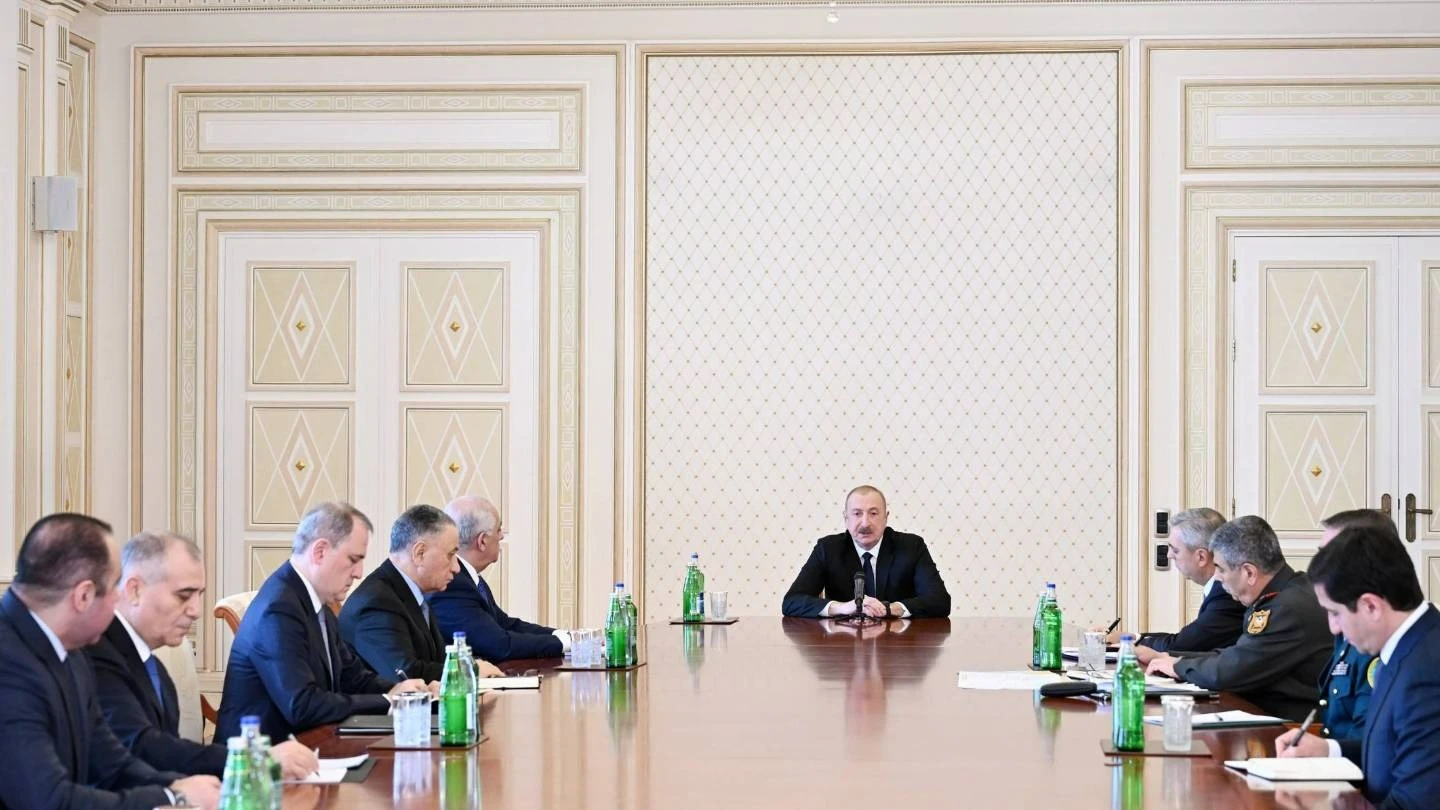
However, the expressions used by Ilham Aliyev toward Iran during the March 5 meeting of the Security Council were far removed from elite diplomatic style. Some of the metaphors and the humiliating tone in the speech resembled not the method of conveying a message by a head of state, but rather the emotional lexicon of a “street argument” (President.az, March 2026). Phrases such as crushing skulls with an iron fist may be presented in political discourse as demonstrations of strength, yet their semantic weight more closely resembles aggressive street dialogue. Diplomatic language, by contrast, should correspond to the seriousness of state conduct and should express political positions without humiliating the opposing side (unfortunately, we cannot fully reproduce Ilham Aliyev’s slang language in this text, as it would be unethical), and without emotional excess.
Leader Discourse and the Language of the Street
The main problem in Ilham Aliyev’s speech lies not in the content of the rhetoric but in its lexical level. The language of a head of state should simultaneously carry a political message and serve as an indicator of the political culture of the state. In the speech we do see a message, but unfortunately we cannot see even the alphabet of political culture. The lexicon used:
- aims to humiliate the opposing side,
- places emotional aggression at the forefront,
- throws diplomatic etiquette into the trash.
In journalistic terms, this rhetoric resembles the harsh verbal duels of street youths.
The Diplomatic Function of Harsh Language
Nevertheless, from a political science perspective, such rhetoric, although rare, does occur. The security dimension of international relations theory explains leaders’ use of emotional and dramatic language in security matters as an attempt to mobilize public support (Wertman, Kaunert, 2022). In Aliyev’s speech, the framing of the incident as a “terrorist act,” followed by the use of harsh metaphors, corresponds precisely to such a strategy:
- to emphasize the national security dimension of the incident;
- to legitimize strong retaliatory measures;
- to refresh the image of a strong leader before the domestic audience.
This rhetoric could be interpreted as a non-elite form of deterrence diplomacy—if inappropriate humiliating expressions did not dominate the entire speech.
For example, Vladimir Putin and Recep Tayyip Erdoğan, whom Ilham Aliyev appears to attempt to imitate, also frequently use metaphors of strength. However, they usually construct their speeches more strategically, grounding them within historical or ideological frameworks. In Aliyev’s speech, by contrast, similar metaphors appear directly and emotionally, without any ideological or historical dimension. This eliminates the diplomatic character of the speech and reduces it to the level of polemics.
Yet from the standpoint of diplomatic maneuvering, his speech should have fulfilled two parallel functions:
- a deterrence message to external audiences,
- the demonstration of a strong leader image to the domestic audience.
However, the aggressive lexical level of the speech weakens the strategic ambiguity that is one of the fundamental tools of diplomatic craft. Diplomacy is often the art of keeping doors open; expressions resembling street polemics, by contrast, close those doors completely. One may ask: will a future author writing the history of Iran–Azerbaijan relations be able to cite these expressions? What place will this speech occupy in history, given that it emerged at one of the most tense moments between the two countries and should have served as a significant historical source?
In summary, Ilham Aliyev’s speech regarding Iran could have been considered, from a political science perspective, an example of classical security discourse. The speech could have created a narrative of threat, conveyed a deterrent message to the opposing side, and at the same time strengthened the leader’s image as the principal guarantor of state security. Indeed, the framing of the incident as a security issue, the emphasis on the possibility of retaliatory measures, and the demonstration of state power are elements typical of classical deterrence diplomacy.
However, the most prominent aspect of the speech lies not in its content but in its lexical and emotional construction. Numerous humiliating expressions and aggressive metaphors contained in the speech exceed even the outer limits of diplomatic rhetoric. In other words, the potential diplomatic function of the speech—creating a threat narrative and delivering a deterrence message—becomes sacrificed to emotion.
As a result, what could have been a historically strategic and diplomatic message instead transforms the leader into a theatrical character.
References
Drazen Pehar, 2021. Historical rhetoric and diplomacy – An uneasy cohabitation. https://www.diplomacy.edu/resource/historical-rhetoric-and-diplomacy-an-uneasy-cohabitation/
President.az, mart 2026. Ilham Aliyev chaired meeting of Security Council. https://president.az/en/articles/view/71792
Wertman, Kaunert, 2022. The Audience in Securitization Theory. https://www.researchgate.net/publication/366759324_The_Audience_in_Securitization_Theory
